
Anne Arundel County City Directory Collections
Start with the Maryland State Archives directory guide. It is the fullest inventory of Anne Arundel County holdings. It reveals that the shelf holds several separate runs rather than one continuous annual title. Pick a volume by year and community before anything else. The 1887 county gazetteer, the Annapolis volumes, and the telephone issues each answer a different question about past residents. The Polk books answer another. Remember that a gap between two dated editions is simply missing evidence. It never proves a household packed up and left town.
| Collection | Years | Where held | Access |
|---|---|---|---|
| Anne Arundel Directory and Gazetteer of Maryland | 1887 | Maryland State Archives directory inventory | Consult the inventory and repository record |
| Annapolis I Remember, SC 2140 | 1896-97, 1910, 1924, 1934, 1939 | Maryland State Archives | Repository collection and directory guide |
| First Colored Directory section | 1925-26 | Maryland State Archives inventory | Consult in its stated collection context |
| Polk Annapolis issues | 1928-29 and 1934 | Trott collection named in the MSA guide | Repository access |
| Telephone-directory issues | 1909, 1932, 1936-37, 1947-48 | Maryland State Archives holdings | Dated research lead, not a continuous run |
The Archives directory guide is the source for the inventory shown here.
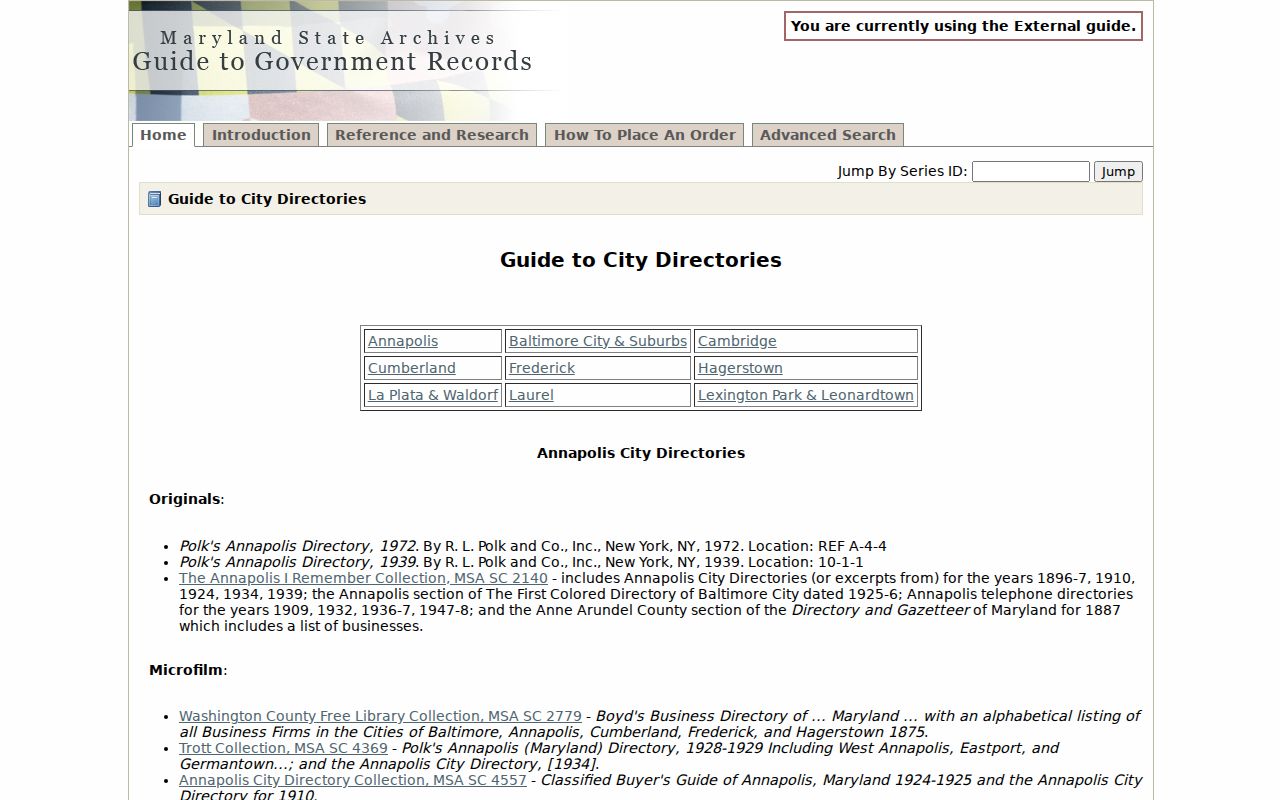
The guide sorts out a county gazetteer, a printed directory, a telephone book, and a classified issue. That distinction is worth making before any name search begins. It documents no final year for a printed Annapolis directory. The later items do not form a continuous sequence. Record the volume title and year in every note. Gaps between editions stay gaps. Note: A dated directory line proves a publication year. It cannot establish that a household lived in Anne Arundel County between editions.
1924 Annapolis City Directory Images
The digitized AOMOL Annapolis volume of 1924 works page by page like the original book. It is not a modern name database. Begin at the collection page. Then work through the alphabetical pages and the street guide on the images themselves. Its table of contents lists an alphabetical name section and post office material. It also includes the street and avenue guide, a classified business directory, and Annapolis city government material. Each part yields a different lead. The digitized 1924 directory is the source behind this page-image view.
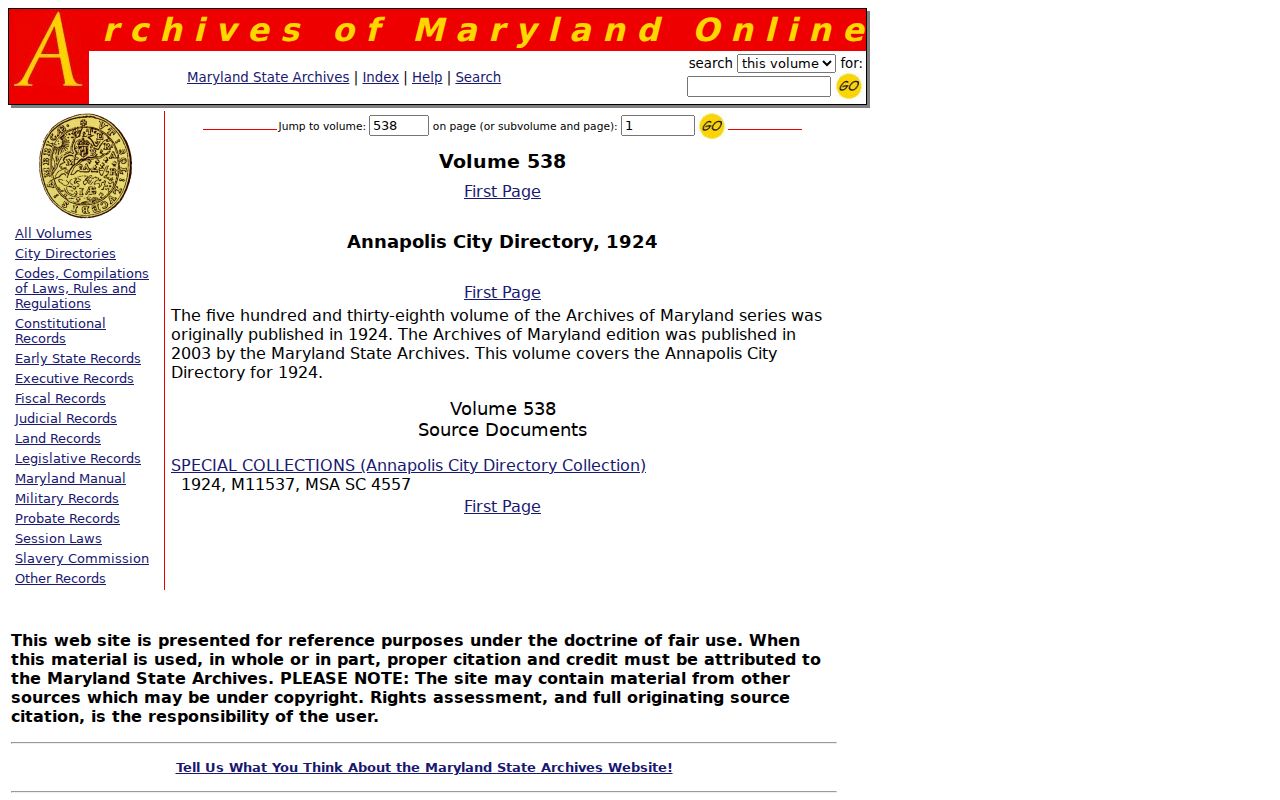
Read the displayed image character by character. The collection warns that its OCR is computer-generated, so the page itself is the authority. One heading in the volume reads “Street and Avenue Guide and Directory of Householders.” This makes the street section especially valuable once an old address is known. Treat OCR snippets as navigation aids only. A careful transcription notes the page number, the printed spelling, the street, and the visible line. It does not quietly fix a name.
Reading Anne Arundel City Directory Entries
Every entry is a compact record whose meaning shifts with the edition. The 1924 volume shows name, street, address, and occupation text, along with the directory part where the line appears. No volume-wide key for spouse notations, ownership symbols, or abbreviations applies to every Annapolis edition. Read the introductory pages first. Check the line itself before treating an abbreviation as fact.
| Collection page | Identifies the digitized item and its title or year. |
|---|---|
| Directory part | Shows whether the line is in the alphabetical list, street guide, classified material, or front matter. |
| Visible name | Preserve initials, suffixes, and spelling as printed on the image. |
| Street and address text | Records a dated location lead that should be compared with other records. |
| Visible occupation text | May help separate similar names, but only when the printed line clearly supplies it. |
Three terms help keep a transcript honest:
- Criss-cross directory
- A directory arranged by street or address rather than name. No complete Anne Arundel countywide run was documented, so ask the local repositories about a specific year.
- Householder index
- An address-oriented listing of householders. The 1924 street guide is a relevant local example, but its page image must be read directly.
- Abbreviation key
- A page that explains a volume’s shortened terms. No stable Annapolis key was retained in the research, so photograph it only when it appears in the consulted volume.
Names can shift between the alphabetical pages and the street section. A missing name may simply reflect initials, a different community label, a publication gap, or an OCR miss. Treat an absence as a lead to chase, never a firm negative result.
Anne Arundel County City Directory Shelf
Anne Arundel Public Library genealogy resources bridge the printed volumes and other county records. They also cover in-library databases and local-history files. The Joan Cass Beck Special Collections room sits on the fourth floor at 2664 Riva Road. It holds genealogy material, maps, planning and settlement papers, historic-building files, archaeology, and cemetery files. Appointments are listed at 410-222-7432. When an address or surname needs context beyond a printed listing, these are the follow-up channels. They are worth using. The AACPL genealogy resources page documents this access point.

A library visit pays off when an online directory page needs a map, a cemetery file, a newspaper, or another dated companion record from the county. Kuethe Library adds roughly 4,000 volumes, plus manuscripts, maps, photographs, biographical files, telephone directories, census material, clippings, plats, and local real-estate records. It publishes a searchable catalog and lists a $5 daily charge for non-members; call ahead before traveling. Its holdings, along with Joan Cass Beck’s appointment access, stand ready when an online index lacks the edition a search needs. Note: Bring the directory year, name variants, the community label, and any old street spelling when asking a librarian for a specific volume.
Anne Arundel City Directory Timeline
The directory sequence sits inside a much longer records history in Anne Arundel County. The Maryland Manual chronology traces the early Annarundell and Providence County names, then notes that Anne Arundel Town became Annapolis in 1695. That context matters when a family surfaces under an older place label. The first county directory item is the 1887 gazetteer. The earliest Annapolis holdings in the official guide begin with 1896-97.
- 1650 and 1695: Earlier Annarundell, Providence County, Anne Arundel Town, and Annapolis labels can affect a catalog search.
- 1887: The Anne Arundel Directory and Gazetteer is the earliest county item located.
- 1896-97 through 1948: The documented shelf includes selected city volumes and telephone issues, with gaps between them.
- 1924: AOMOL provides page images and OCR that require image-level verification.
The Maryland Manual chronology supplies the naming and records-history backbone for the county. It also records that the Church Circle courthouse opened in 1824, a useful address clue when an old source mentions only the county court.
Ann Arrundell City Directory Clues
The spelling “Ann Arrundell” survives in the Ann Arrundell County Historical Society digital collection. That spelling is evidence in itself. It is not necessarily a bad scan. Pair it with the chronology’s Annarundell and Providence County references. Then search both historic and modern forms across catalogs, directory pages, maps, and newspapers. One small spelling choice can save a title or plat record from being missed. The historical society’s digital collection documents the older local form.
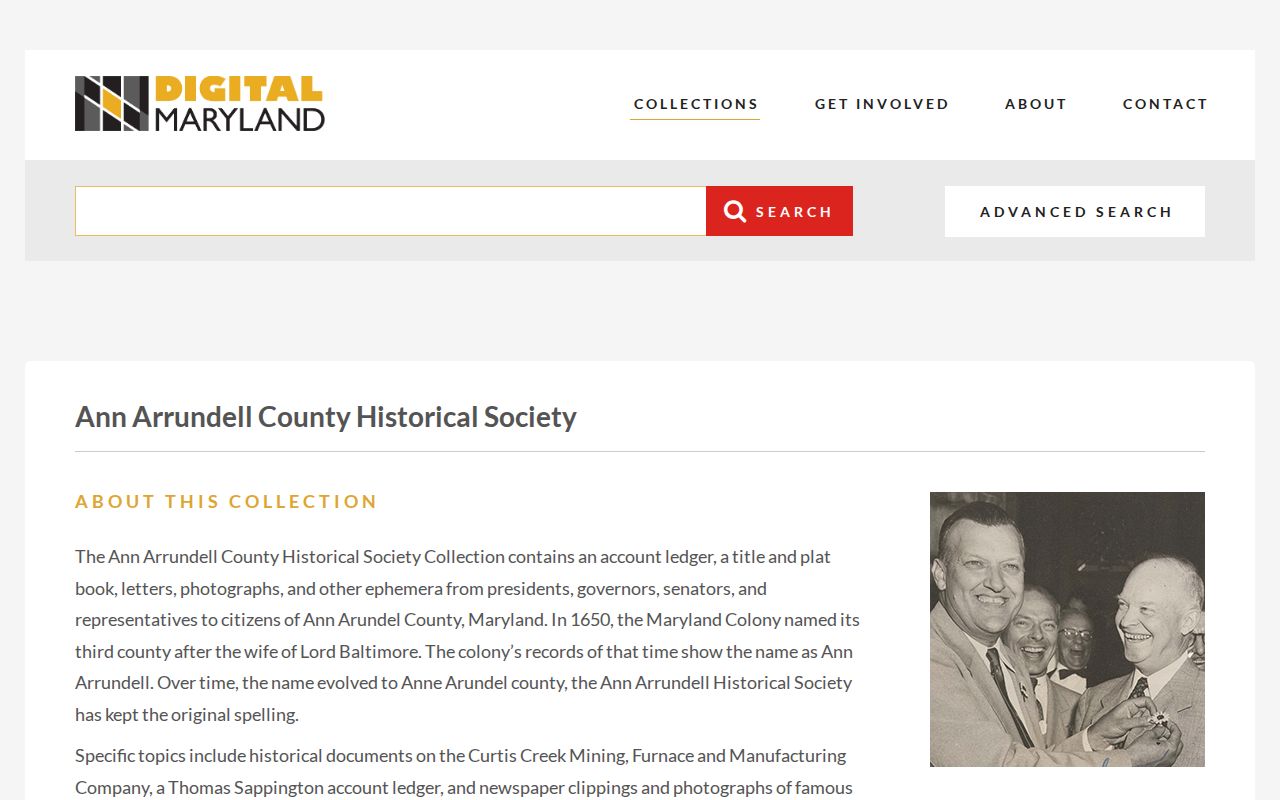
The collection reaches beyond the directories themselves. It holds ledgers, title and plat material, letters, photographs, and ephemera. Those items let you test a directory lead against a named local record. A deed book or plat sheet can confirm what a printed line only suggests.
Cite the printed form as it appears. Then add a separate note with the modern name. That habit preserves the source. It also keeps the line connected to today's Anne Arundel County catalogs.
Anne Arundel City Directory Fallbacks
No online copy? Go repository first, not guesswork. Ask AACPL or Kuethe for the exact title and year, and whether the volume sits on a shelf, on microfilm, or requires an appointment. The Maryland State Archives offers both current finding aids and access to older series. Staff there can tell a truly missing year from a volume filed under a different community or collection name.
Keep a short citation as you go. Record the repository, collection name, printed title, year, and page. Note whether the line came from an image, a microfilm reader, or an original. That note makes a later correction possible. It also keeps an OCR fragment from posing as a source.
If a volume stays out of reach, move to the nearest documented directory issue, a newspaper archive, census, probate series, or map rather than filling the gap with an assumption. Maryland State Archives guidance treats electronic records, microfilm, and originals as separate channels. Joan Cass Beck, Kuethe, the county clerk, and the Archives all help when a catalog leads past a simple web search.
Note: A repository citation should preserve both the printed place name and the modern Anne Arundel County description when they differ.
Tracing Anne Arundel City Directory Households
Trace a household as a dated sequence. Begin with the earliest confirmed directory line. Then pair it with the nearest released federal census. The census reaches 1950 under the 72-year rule. Add a newspaper, probate, cemetery, or deed record only for the question it can answer. A directory gives a year and an address context. It cannot prove a continuous stay or a current location.
- Find a name in the edition closest to the period being studied and save the volume title and page.
- Read nearby alphabetical or street-guide lines for initials, community labels, and address context.
- Check the next documented directory issue, without assuming missing intervening editions exist.
- Pair the dated line with the nearest census, deed, newspaper, probate, or cemetery lead.
- Compare spelling, relatives, street, and date before joining two entries to one household.
The Library of Congress Annapolis Sanborn collection adds building and street context for Eastport, West Annapolis, Parole, Bay Ridge, and other mapped communities. Its editions show streets, footprints, building use, and fire-insurance detail. They name no occupants. Pair them with a directory or another dated record to connect people to places.
Once the historical volume supplies a period and spelling, the Anne Arundel County street directory works well for an address-centered modern record trail.
Note: A name that drops from one printed edition may reflect a move, a changed listing form, or a gap in the surviving run.